
Our History
The Diocese of Sodor and Man has had a Cathedral in Peel since its founding in 447 with the arrival of St German, a disciple of Patrick, Ireland’s patron saint.
There have been several manifestations of the Cathedral, all but one being on St Patrick’s Isle, now connected to Peel via a causeway. The last of these ancient cathedrals on St Patrick’s Isle is Medieval and remains in ruins, the earliest visible elements dating back to the time of Bishop Simon (1229-1252) who was previously Abbot of Iona, who built the sanctuary. (Iona and the Isle of Man were part of the same maritime kingdom for 250 years.) However because of the competing demands by the State for St Patrick’s Isle on the grounds of its strategic importance in protecting the Island from invasion, the Cathedral fell into ruins. By the 1730s it suffered the indignity of the governor removing the roofing from the nave to cover the Lord of Mann’s stables in Castletown.
Bishop Claudius Crigan in 1784 was the last Bishop to be enthroned in this ancient Cathedral. The demise of the Cathedral meant that Bishopscourt chapel (home of the Bishop in Michael parish) became the pro-Cathedral.
There were attempts to restore the ancient Cathedral during the nineteenth and twentieth centuries. One of these was headed by Archibald Knox, the ghost designer of the ‘Liberty of London’ brand.
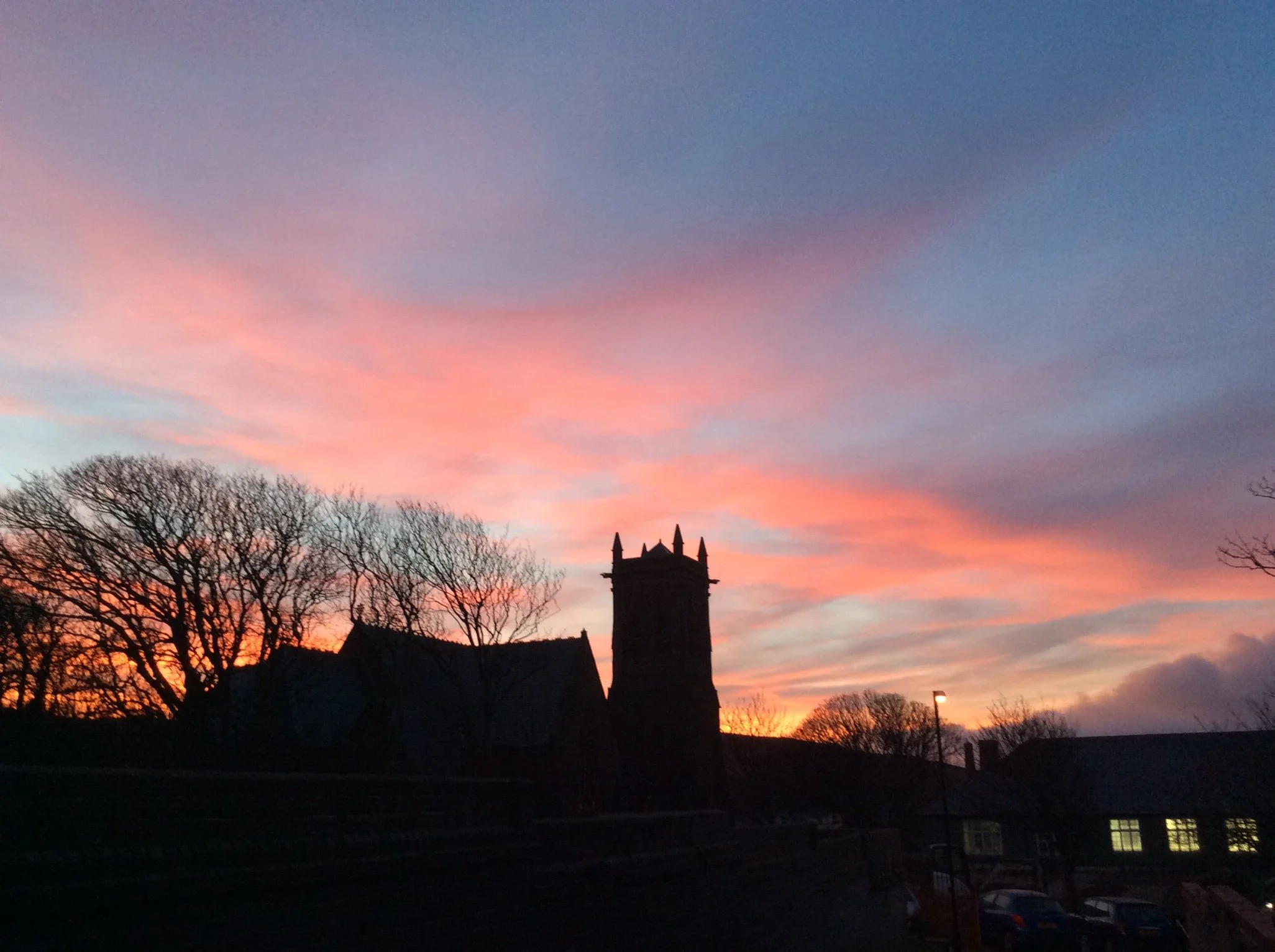
The present Cathedral is now located on what were the outskirts of Peel and was designed by T. D. Barry & Son of Liverpool. The architectural style is Gothic Revival. It is a registered building in a Conservation area and if in England would be listed Grade II (See Statement of Significance). The stonework is red sandstone, a stone on the Isle of Man which is unique to Peel, though a more robust section of the same seam emerges in Cheshire and key elements of the stonework decoratively carved have been imported.
It was built over a five-year period with the foundation stone being laid on 21st August 1879 and opened as the ‘New Church’ on 26th August, 1884. Bishop Rowley Hill intended it to be his new Cathedral, but died before the necessary legislation was passed by Tynwald, so it simply became the parish church of Peel, with the Bishop’s private chapel acting as the pro-cathedral. A hundred years later in 1980 with the sale of the Bishop’s Palace (Bishopscourt, Kirk Michael) and its chapel, St German’s parish church was elevated to the status of Cathedral.